Storm and ice damage in Franklin, taken in order of danger.
Middle Tennessee’s trees fail on two schedules: spring wind and winter ice. When either arrives, the phone is answered day and night, and a trunk resting on a roof outranks everything else on the list.
When the damage can’t wait
Call before you read further. Tell us the address and whether anything is touching a structure — you’ll have a real answer on timing before the call ends.
(615) 813-4751The two seasons that break trees here
Spring wind. The storms that roll through Middle Tennessee in spring find every weak fork and every limb that pruning never corrected. Hackberries are the local specialists at this — sound-looking limbs let go without much warning — and silver maples follow close behind, splitting at the unions where they have been quietly failing for years.
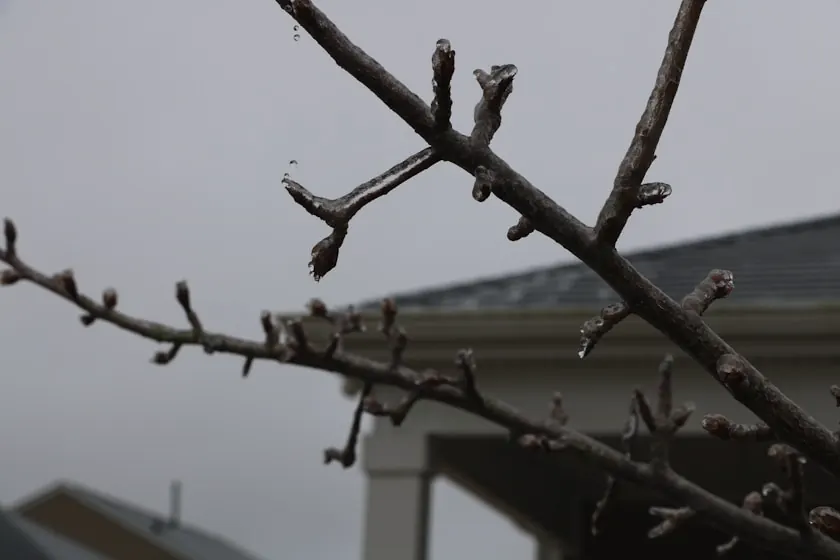
Winter ice. Ice is the patient one. It coats every limb and keeps pressing — a static load a tree cannot flex away the way it sheds a gust — until something gives. Eastern red cedars bow to the grass under it; Bradford pears break apart at the center; brittle ash deadwood — and Franklin has plenty since the emerald ash borer arrived — drops without negotiating.
The result, most years, is a spring cluster and a winter cluster of the same calls: limbs hanging half-broken in the crown, whole trees leaning onto a neighbor’s fence, and the occasional trunk across a roofline.
What should you do first when a tree comes down?
Check for wires before anything else. If a line is anywhere in the tangle, treat the whole area as live, keep everyone clear, and report it to the utility — no tree crew touches wood on a wire. Next, give the tree itself a wide margin: wood under tension stores force you can’t see, and a leaning trunk or a limb caught in the crown can shift without being touched. Once people are clear, take pictures from a distance if a building or vehicle is involved — insurers ask for them, and we allow time for that documentation whenever the damage involves a claim. After that, call us and describe what you see.
Why does emergency work cost more?
Because the same cut takes three times the care. True emergency work bills at two to three times the standard rate: wood under load behaves unpredictably, footing is poor, and safety, not the schedule, decides the tempo. There is a cheaper truth too, and you’ll hear it from us when it applies: a tree lying quietly in the middle of a lawn is not an emergency, and letting it wait for a normal-schedule removal can cut the bill substantially.
After the cleanup
Storm work ends the way every job here ends: debris hauled, surfaces cleared, and a walk around the property together. If the storm left a stump where a tree used to be, grinding it out during the same cleanup spares you a return-visit charge later. And if the storm exposed limbs that nearly failed, a dormant-season pruning visit is how the next storm finds less to work with.
Weather already came through?
Call first. If it can wait, the estimate request works for storm damage too — note that it’s weather-related and we will sequence it honestly.